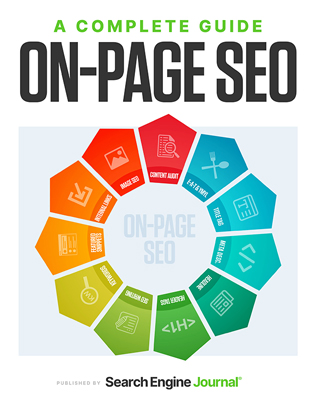
On-page SEO is the process of optimizing individual website pages so that search engines can understand their content and users can find useful information. Specifically, it includes core structural elements such as titles, headings, URLs, content, internal links, images, and search intent.
For this reason, anyone learning optimization will find that on-page SEO is undoubtedly one of the very first areas to master.
What Is On-Page SEO?
First and foremost, on-page SEO focuses exclusively on elements that can be improved directly on a website page.
This approach is highly different from off-page SEO, which in contrast involves activities outside your own website, such as earning relevant links and building online authority. Ultimately, a strong on-page SEO strategy starts with deeply understanding exactly what users are searching for.
Keyword Research
Keyword research helps identify the precise language people use when searching for information online.
However, instead of inserting keywords repeatedly, you should focus on creating comprehensive content that naturally answers the searcher’s question. Consequently, the primary keyword should appear fluidly in important locations, including the title and introduction.
SEO Title
The title tag is arguably one of the most visible elements in search engine results pages.
Therefore, an effective on-page SEO title should clearly communicate the primary topic and actively encourage users to click through.
For example:
- Poor: SEO Guide
- Better: On-Page SEO: Complete Beginner’s Guide
Clearly, the second title gives users a much better understanding of what they will find when they visit the page.
Meta Description
A meta description succinctly summarizes a page’s core content.
Although search engines may occasionally generate their own snippets, a well-written description can nevertheless communicate the page’s unique value to searchers. To achieve this, make sure to include the primary topic naturally rather than repeating it unnecessarily.
URL Optimization
In addition to titles, website URLs should be short, highly descriptive, and easy to understand.
For example:
example.com/on-page-seo-guide
This clean structure is generally speaking much clearer to both users and bots than a URL containing random numbers or unnecessary tracking parameters.
Heading Structure
Headings help organize your content into logical blocks.
As a rule, you should use one clear H1 tag for the primary topic, and subsequently use H2 and H3 headings to organize supporting sections. Ultimately, a good heading structure makes long articles significantly easier to scan, thereby improving the overall reading experience.
Content Optimization (on-page SEO)
High-quality content is undoubtedly at the absolute center of on-page SEO.
Consequently, your content should directly answer the user’s search intent rather than simply repeating keywords. To add value, be sure to include real-world examples, clear explanations, statistics where appropriate, practical steps, and answers to common questions.
Internal Linking (on-page SEO)
Internal links serve to connect different pages together on the exact same website.
For instance, an article about general SEO can link out to related articles about keyword research, technical SEO, analytics, and content marketing. In this way, internal linking helps users discover additional information while simultaneously helping search engines understand the relationships between your pages.
Image Optimization (on-page SEO)
Images can greatly improve an article, especially when they provide useful visual information.
Therefore, you should always use descriptive filenames alongside relevant ALT text. Furthermore, remember to compress large images to improve page performance, while carefully avoiding using an image solely to stuff keywords into the ALT text.
Readability (on-page SEO)
Good SEO always heavily considers the user experience. For this purpose, make sure to use:
- Short paragraphs
- Descriptive headings
- Bullet points
- Examples
- Simple language
- Clear explanations
Above all, a page should always be written for human beings first.
On-Page SEO Checklist
Before hitting the publish button, strictly check that you have:
- Completed thorough keyword research
- Identified the user’s search intent
- Optimized the main SEO title
- Written a compelling meta description
- Cleaned up and optimized the URL slug
- Added a single, clear H1 tag
- Created an organized H2/H3 structure
- Added helpful internal links
- Properly optimized all images
- Added descriptive ALT text to graphics
- Proofread the content carefully
- Checked the mobile user experience
Final Thoughts
In conclusion, effective on-page SEO is entirely about making a webpage understandable, useful, and accessible.
Instead of focusing entirely on keyword frequency, you should instead focus on creating comprehensive content that satisfies the user’s immediate needs. After doing so, you can easily optimize the titles, headings, links, images, and URLs to match.
Frequently Asked Questions about on-page SEO
What is on-page SEO?
Specifically, it is the optimization of elements directly on a webpage to improve its relevance, usability, and organic search visibility.
Is keyword stuffing necessary?
No. In fact, keywords should always be used naturally and supported by related terms.
What is the most important part of on-page SEO?
Generally speaking, there is no single element that guarantees rankings. Instead, content quality, search intent, page structure, and technical health all matter equally.