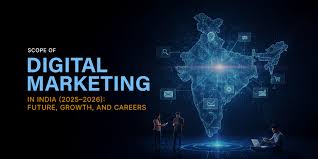
The modern business environment is undergoing a rapid, technology-driven evolution. Traditional advertising avenues like newspapers, television, and radio are continuously conceding ground to targeted internet-based alternatives. Specifically, the current scope of web-driven outreach expands across countless channels. Allowing brands to communicate globally while personalizing messages down to specific individual metrics for better scope in digital marketing.

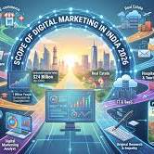
Scope of Digital Marketing in India 2026: Career Opportunities, Salary & Future
Understanding the scope of this field requires analyzing consumer data tracking, cloud infrastructure development, and algorithmic optimization. Therefore, whether you are an entrepreneur looking to scale an enterprise or a student evaluating professional avenues,
mastering these digital domains offers a sustainable foundation for long-term growth.
1. The Multi-Trillion Dollar Internet Shift
The primary catalyst for this shift is fundamentally simple, almost everyone is online now. In fact, the widespread availability of highly affordable mobile smartphones and lightning-fast data networks has permanently and irreversibly altered global media consumption habits.
As a direct result of this digital evolution, modern consumers now spend the vast majority of their daily browsing, shopping, and interaction time within virtual spaces.
Consequently, modern businesses no longer view a digital presence as a luxury, but rather as an operational necessity. To remain truly viable and competitive in today’s marketplace,
companies have no choice but to aggressively follow their target audiences online and establish strong, highly engaging digital footprints.
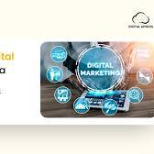

Furthermore, the overall global commercial landscape is expanding at a massive, unprecedented scale. Major industry trackers like the Delhi Institute of Digital Marketing (DIDM)
note that digital advertising expenditures are consistently growing at immense, double-digit annual percentages worldwide. This massive spending influx strongly emphasizes exactly why modern brands now rely so heavily on highly skilled marketing professionals.
In today’s cutthroat digital marketplace, organizations desperately need experts who can seamlessly manage complex, multi-channel digital budgets. Without this specialized oversight, companies risk wasting significant capital on inefficient campaigns,
making top-tier digital talent absolutely essential for sustainable corporate growth.
2. Search Engine Optimization (SEO)
Search Engine Optimization, or SEO, serves as one of the ultimate, indispensable foundations of a brand’s organic internet footprint. Specifically, it refers to the exact, highly strategic process of optimizing underlying technical architectures, improving overall user experiences, and crafting targeted copywriting.
By meticulously aligning these elements with modern algorithmic demands, organizations can drastically improve their online visibility. This comprehensive optimization directly helps individual web pages rank significantly higher in unpaid,
organic search results, driving valuable consumer traffic without relying on costly paid advertising.



Instead of paying continuously for temporary, fleeting advertisement impressions, investing heavily in high-quality SEO builds an ongoing,
highly valuable digital asset. To successfully achieve this long-term authority, technical teams must constantly audit website core architecture, refine complex internal linking structures, and produce deeply researched content that perfectly addresses human intent.
When major search engines recognize a website’s genuine authoritative value, the platform gains a steady influx of high-intent organic traffic. Ultimately, this sustained visibility transforms casual, organic search queries into consistent, highly profitable business conversions over extended periods of time.
3. Pay-Per-Click Advertising (PPC) and Search Marketing
In stark contrast to organic methods, Pay-Per-Click (PPC) advertising provides an immediate, highly effective mechanism to generate qualified web traffic. Advertisers strategically bid on specific transactional keywords within dominant platforms like Google Ads and willingly pay a precise, pre-determined fee each time a searcher actively interacts with their displayed ad unit.
Therefore, comprehensive search engine marketing allows agile businesses to place their tailored promotional offers directly in front of motivated buyers at the exact millisecond they express strong commercial interest.
This incredibly precise targeting capability makes paid advertising an invaluable asset for high-profile product launches, time-limited promotional offers, and highly competitive service industries looking to capture immediate consumer demand before their rivals do.
4. Content Marketing and Topical Authority
High-quality copy sits at the absolute center of all visibility campaigns. For instance, regular blog posts, white papers, and long-form analytical articles allow an enterprise to solve customer problems proactively. By doing so,the brand quickly establishes what search platforms classify as topical authority,
which in turn signals to search engine crawlers that the website is a trustworthy source of information.
Furthermore, targeted content marketing forms a highly lucrative, long-term commercial ecosystem. Specifically, providing accessible answers to common troubleshooting questions builds deep consumer trust well before a buying decision is even made by the user.
Consequently, when an enterprise consistently delivers educational value through its writing, it creates a sustainable brand legacy that drives organic leads for years. In addition to this, this helpful approach keeps visitors on the website longer, thereby naturally reducing bounce rates and improving overall search performance. Ultimately, investing in a thorough content plan ensures that a small business remains highly competitive in an crowded online marketplace.
5. The Dominance of Short-Form Video Production
Over the last few years, global media consumption habits have shifted heavily and irreversibly toward fast-paced, highly visual mediums. Specifically, short-form vertical video has rapidly emerged as the absolute dominant content format across all modern networks. This shift is heavily driven by powerful platform algorithms and an internet landscape where user attention spans are often estimated at just a few seconds per video.
To capture this fleeting engagement, proactive brands now routinely deploy bite-sized informational clips, detailed product teardowns, and authentic behind-the-scenes stories designed to maximize consumer attention spans from the very first frame.
However, creating consistently effective video content requires a delicate and careful balance between raw creativity and authentic storytelling. Simply copying fleeting viral trends without adding genuine value rarely builds real, long-term commercial engagement. Instead, modern video production teams focus their efforts on delivering quick, high-impact tutorials or answering frequently asked questions. This targeted, value-first approach is the most reliable way to secure a memorable, highly prioritized spot in competitive social algorithmic feeds.
To help these short-form videos perform optimally, production teams generally focus on three foundational pillars:
Value-Driven Scripting: Eliminating long introductions to keep the information dense, clear, and highly shareable.
The First 3-Second Hook: Crafting an immediate visual or textual hook to prevent users from scrolling away.
Accessibility via Captions:
Adding dynamic on-screen text, as a vast majority of users consume mobile vertical video with the audio muted.
6. Social Media Management and Community Building
Social platforms are no longer just passive broadcasting channels. On the contrary, modern web outreach demands active, multi-directional community communication. Professional teams spend considerable resources directly responding to commentary, processing direct feedback, and
engaging in wider conversations within their industry niches.
Consequently, building a highly engaged community provides a massive protective cushion against changing advertising prices. A dedicated audience that feels heard is far more likely to develop long-term brand loyalty. This strong relationship reduces reliance on expensive paid campaigns and transforms casual followers into active brand advocates.
7. Data Analytics and Business Intelligence for better Scope of Digital Marketing
The single greatest benefit of modern online commercial placement over legacy printing media is its comprehensive, real-time trackability. Highly advanced data measurement tools, most notably Google Analytics, allow webmasters and marketing teams to see exactly how individual users interact with their digital platforms at every stage of the consumer journey.
As a strict rule, modern digital marketers monitor standard behavior metrics closely to optimize their campaigns, including:
- User acquisition channels:
- The specific geographic and digital origins—such as organic search, social media feeds, or paid advertisements—where web traffic is generated.
- Average bounce rates:
- The percentage of visitors who navigate away from the website after viewing only a single page without performing any actions.
- Total user session durations:
- The exact amount of time an individual user spends actively exploring and interacting with the website during a single visit.
- Specific goal conversion percentages:
- The critical ratio of total visitors who successfully complete a desired action, such as signing up for a newsletter or purchasing a product.
- Exact cost-per-result parameters:
- The precise financial expenditure required to achieve a single specified outcome, allowing companies to evaluate true return on investment.
Ultimately, continually analyzing these data frameworks replaces costly guesswork with rigorous, objective reality. By relying on concrete user data rather than speculative intuition, organizations can confidently shift their budgets away from underperforming campaigns and double down on the exact digital channels driving the highest profitability.eal, objective metrics. Ultimately, this level of business intelligence allows companies to cut non-performing campaigns quickly and confidently reallocate budgets toward high-converting traffic channels.
8. Marketing Automation and Scalable Email Funnels for better Scope of Digital Marketing
Managing scale is a significant hurdle for growing online businesses. To resolve this, enterprises rely heavily on sophisticated cloud-based automation tools to guide potential leads through complex sales funnels.
For example, automated email sequences can trigger automatically based on specific consumer actions, such as abandoning an online shopping cart or downloading an educational resource. This ensures that prospects receive highly relevant messaging at the optimal time without requiring manual oversight. In this way, systematic automation transforms raw traffic into organized, high-yielding customer pipelines.
9. Launching a Professional Career in Marketing (Scope of Digital Marketing)
The massive expansion of this sector has opened up diverse, highly lucrative career paths for aspiring professionals worldwide. Specialized academic bodies, such as the Delhi School of Online Marketing (DSOM), emphasize that modern career hunters can successfully enter this fast-growing space right after completing their foundational schooling. Because the digital landscape values practical, up-to-date skills and hands-on portfolio experience over traditional four-year degrees, it has become one of the most accessible and merit-based professional industries available today.
The industry offers numerous career paths depending on individual personal strengths and analytical capabilities, such as:
Digital Analytics Analyst:
Data-driven strategists who monitor user journey behaviors, set up conversion tracking funnels, and translate complex traffic metrics into clear, actionable corporate growth plans.
SEO Specialist: Technical experts who focus on auditing website architecture, optimizing structural data, and building high-quality organic authority to dramatically improve search engine rankings.
PPC Campaign Manager: Analytical professionals who strategically manage paid advertising budgets, oversee complex keyword bidding, and continually optimize return on ad spend (ROAS) across major search and social networks.
Content Strategist & Copywriter: Creative minds dedicated to researching audience intent, writing highly engaging editorial pieces, and scripting short-form video content that effectively drives consumer behavior.
Social Media Manager: Brand custodians who curate digital communities, coordinate multi-platform publication schedules, and directly analyze engagement trends to foster deep consumer trust.
| Job Title | Core Focus | Required Skill Set |
|---|---|---|
| SEO Executive | Organic Growth | Analytics, Technical Audits, Copywriting |
| PPC Campaign Specialist | Paid Advertising | Data Analysis, Mathematical Budgeting |
| Content Strategist | Creative Asset Creation | Writing, Storytelling, Research |
| Data Analyst | Business Intelligence | Advanced Analytics, Data Modeling |
Clearly, you do not need to master every single technical tool simultaneously to build a highly successful, long-term career in this space. Instead, focusing deeply and passionately on mastering just one or two core specializations allows a beginner to secure exceptionally stable, financially rewarding roles across multiple global sectors.
By building a specialized, niche skill set rather than spreading your efforts too thinly, you transform yourself into a highly sought-after expert. This targeted mastery ensures you can deliver immediate, measurable value to hiring organizations, bypassing the entry-level bottleneck and fast-tracking your professional advancement.
10. Core Strategy Integration for Long-Term Growth (Scope of Digital Marketing)
Consequently, by analyzing real performance metrics and consistently delivering genuine value, businesses can securely scale their operations. Furthermore, this deliberate approach allows them to build lasting audience trust while they confidently navigate the future of global digital commerce.
In conclusion, building a highly effective internet presence successfully combines disciplined technical optimization, ongoing audience communication, and rigorous data analysis. It is important to note that organizations do not need to implement every complex tactic simultaneously. Rather, constructing a practical, step-by-step foundation in core SEO and content marketing provides an exceptionally strong platform for sustainable growth.
Consequently, by analyzing real performance metrics and consistently delivering genuine value, businesses can securely scale their operations. Furthermore, this deliberate approach allows them to build lasting audience trust while they confidently navigate the future of global digital commerce.